AI Agents & Automation
AI Agents vs. Automation: What Organizations Need to Know
Automation follows defined rules. AI agents can interpret context, choose actions, and work through variable tasks. The distinction matters when organizations decide what to build.
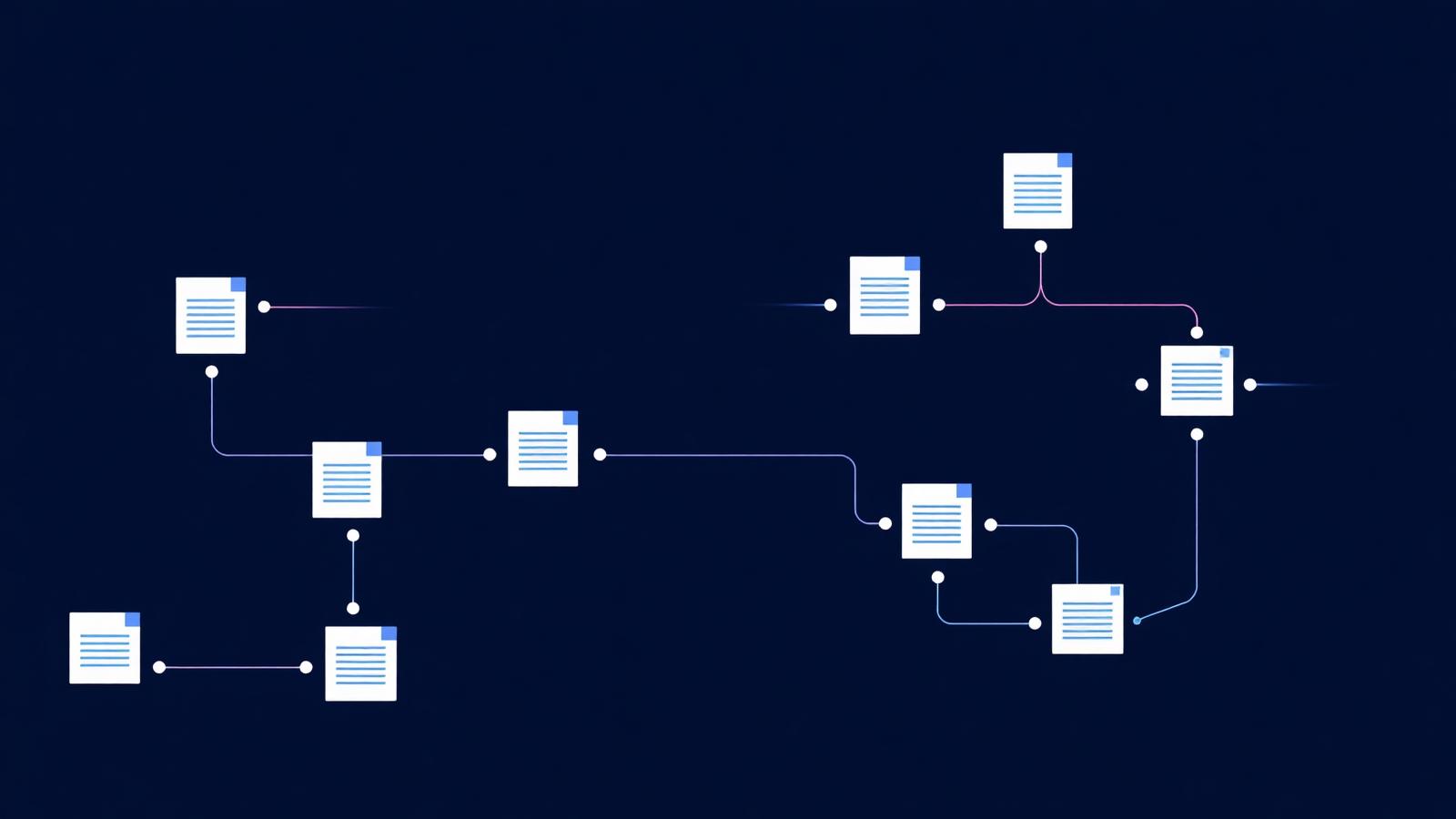
Traditional automation executes a defined sequence. An AI agent can interpret information, select from available tools, and work through a task whose exact path is not known in advance. Between the two is AI assistance, where a model drafts, summarizes, classifies, or recommends while a person decides what happens next.
Organizations do not need to choose the most autonomous option. They need to choose the least complex option that solves the problem safely.
Traditional Automation
Traditional automation is strongest when rules are stable, inputs are structured, and the expected output is predictable. It is excellent for moving records, validating fields, triggering notifications, applying calculations, and enforcing a known sequence.
Its advantages are determinism, testability, speed, and clear auditability. Its weakness is brittleness when inputs are ambiguous or the process depends on language and judgment.
AI Assistance
AI assistance is useful when a person benefits from a first draft, a summary, a classification, a search result, or a set of options. The person remains responsible for deciding, editing, approving, or acting.
This is often the right first step because it creates value without pretending that a variable judgment can be fully delegated. It also lets the team learn where the model is reliable before adding automation around it.
AI Agents
An agent typically combines a model with instructions, tools, context, memory or state, and rules about when to stop or ask for help. It may triage a request, retrieve relevant records, call an API, draft a response, and route an exception.
The agent is not simply a smarter chatbot. It is a system that can take steps in an environment. That makes permissions, audit logs, tool boundaries, and failure handling central design concerns.
Questions to Ask Before Building an Agent
- Does the task have a clear goal and owner?
- What actions may the system take without approval?
- Which actions require confirmation?
- What information may it access?
- How does it show the sources or reasoning relevant to review?
- What happens when tools disagree or information is missing?
- Can a person pause, override, or recover from an action?
- What is logged for later investigation?
If these questions do not have clear answers, the organization is not ready for autonomous action in that workflow.
Use a Human-in-the-Loop Model
Human review should be designed around consequence rather than included as a vague promise. Low-risk internal drafting may need a light review. Customer-facing, financial, legal, safety, or people-related actions require stronger approval and evidence.
The reviewer must have enough context to catch a bad result. A button labeled "approve" does not create meaningful oversight if the system hides its sources, assumptions, or uncertainty.
Pick the Smallest Useful System
Start with an assistive version of the workflow. Establish a baseline, collect real cases, document failure modes, and identify what information and tools the system needs. Only then consider allowing it to act more independently.
An agent can be appropriate for a bounded queue with clear permissions and recoverable errors. It is a poor first choice for a vague process with high consequences and no agreed definition of success.
Measure the System, Not the Demo
Evaluate task completion, accuracy against a defined standard, escalation quality, time saved, user trust, and recovery from failure. Test representative and difficult cases, not only ideal examples.
Continue evaluation after launch. Models, source systems, policies, and workflows change. A system that was safe in one operating context can drift when any of those inputs changes.
Agents are a powerful pattern, but they are not a substitute for workflow clarity. Organizations that first understand the work can decide where rules, assistance, and autonomous action each belong.