
AI Academies
What Is an AI Academy?
An AI Academy is more than a set of AI courses. It is an organizational system for building capability across roles, pathways, practice, policy, and continuous learning.
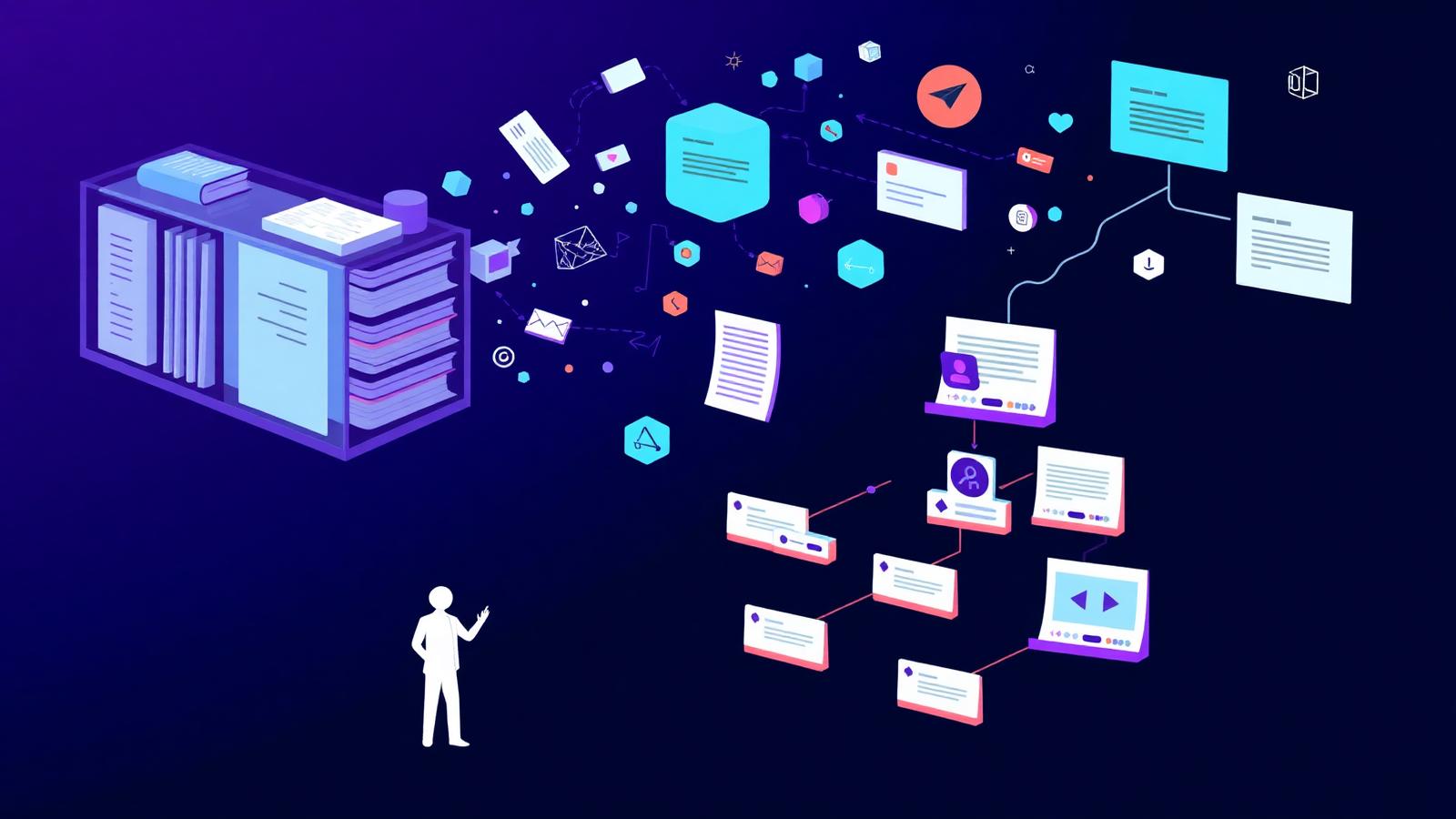
An AI Academy is a structured learning environment that helps an organization build practical capability with artificial intelligence. It brings together curriculum, role-specific pathways, courses, practice, assessment, policies, and ongoing updates in one coherent experience.
The important word is structured. A folder of AI recordings, a list of links, or a one-time workshop can all be useful. None is an Academy by itself.
An Academy gives people a place to start, a path to follow, a way to practice, and a reliable source to return to as tools and organizational expectations change.
What an AI Academy Includes
A complete AI Academy usually contains several connected layers.
A curriculum. The organization decides what people need to learn and in what order. This is different from collecting whatever content happens to be available.
Learning pathways. Executives, managers, general employees, technical teams, and specialized functions need different outcomes. Pathways make those differences visible and actionable.
Courses and lessons. Content is broken into teachable units rather than presented as a long policy or an unstructured video archive.
Practice. Learners apply ideas to real tasks, workflows, documents, and scenarios. Practice converts understanding into usable behavior.
Assessment. Knowledge checks, exercises, and applied evaluation show whether someone can use the capability rather than simply recognize its vocabulary.
Governance and policy. Approved tools, data boundaries, review expectations, and responsible-use guidance should be available where learning happens.
A learner experience. Catalog, search, progress, recommendations, and clear navigation determine whether people return when they have a question.
Continuous learning. The Academy has a way to add new capabilities, update old content, and capture questions that reveal where the organization needs more clarity.
How It Differs From a Course Library
A course library is organized around content inventory. An Academy is organized around capability.
In a library, a learner may find ten courses about prompting and still not know which one applies to their role. In an Academy, the learner enters through a relevant pathway, encounters the essential foundation, practices on a role-specific task, and knows what to learn next.
A library asks, "What do we have?" An Academy asks, "What should this person be able to do, and how will we help them get there?"
The distinction also changes ownership. Libraries tend to become content repositories. Academies require curriculum ownership, review cycles, learning design, and a plan for how new knowledge enters the system.
Who Does an AI Academy Serve?
A well-designed Academy can serve several audiences without pretending they all need the same program.
- Executives need judgment about opportunity, risk, investment, and change.
- Managers need to redesign team workflows and coach safe use.
- The general workforce needs practical literacy, prompting, verification, privacy, and role-relevant application.
- Specialist functions need scenarios tied to their work and policies.
- Technical teams need deeper content on building, integrating, evaluating, and operating AI systems.
- Customers, members, partners, or professionals may need education about products, standards, or an industry's emerging AI practices.
One Academy can contain multiple audiences and access rules. That is one of its advantages over a single event.
Why Organizational Knowledge Belongs Inside It
AI capability is not only knowledge about models and tools. It is also knowledge about how the organization works: which data matters, how decisions are made, what policies apply, which workflows are sensitive, and what quality means in a particular function.
This organizational knowledge is what turns generic AI education into usable education. A lesson on verification is more useful when it uses the organization's real reporting process. A lesson on prompting is more memorable when it transforms a real internal document. A lesson on responsible use is clearer when it reflects the organization's actual approval boundaries.
Organizations that already have training materials, standards, research, policies, recordings, or expert knowledge do not need to begin with a blank page. They need to turn what they know into learning that is structured around an audience and an outcome.
What Makes an Academy Useful
The experience has to work at the moment of need, not only during an assigned program. That means a learner can find a course, resume progress, ask a question, locate the relevant policy, and move from explanation to practice without hunting across systems.
It also means the Academy is branded and owned by the organization. A branded destination communicates that the knowledge belongs to the organization and that the learning experience is part of how it serves its people and audiences.
Useful Academies balance linear and non-linear learning. Pathways guide beginners, while search and reference navigation support experienced people who need one answer quickly.
How AI Changes Academy Operations
AI can help with the production and use of an Academy, but it does not replace curriculum judgment or expert review.
During development, AI can help restructure source material, draft lessons, generate assessment candidates, summarize recordings, adapt content for audiences, and identify gaps. During learning, an AI-supported instructor can answer questions grounded in approved Academy content, suggest the next lesson, or offer practice feedback.
The guardrail is authority. AI can accelerate the work of organizing and presenting knowledge. Subject-matter experts still determine what is correct, current, and appropriate to teach.
When an Organization Is Ready
An organization is ready to consider an AI Academy when AI questions are appearing across functions, existing training is scattered, leadership wants more consistent adoption, roles require different learning paths, or the organization has knowledge that should reach employees, customers, members, or professionals.
The first version does not need every topic. It needs a clear audience, a high-priority pathway, accountable owners, and a maintenance model. Start with the capability that matters most, prove the structure, and expand deliberately.
An AI Academy is ultimately how an organization makes learning part of its AI strategy — not a side event, but a maintained destination where people build the knowledge and judgment to use AI well.