AI Strategy
Your Website Is Getting Traffic. Where Are the Customers?
Every channel in the marketing budget ends at the same place: a website that waits. The cheapest growth available to most businesses is the traffic they are already paying for.

Look at where a growth budget actually goes. Google Ads. LinkedIn. Meta. SEO retainers. Content production. Email. Social. Influencers. Sponsorships. Agencies to coordinate the rest.
Different disciplines, different vendors, one shared objective: get a person to the website.
Now look at what happens when the objective is achieved. In most companies, the answer is that the website waits.
The Job We Quietly Ask Visitors To Do
A passive website asks the visitor to do the selling. Read enough pages to understand what we do. Work out which service applies to your situation. Judge whether you are a fit. Decide you are ready. Find the contact page. Fill in a form with no idea what happens next. Or call, during business hours, and explain yourself to a stranger.
That is real work, performed by someone who arrived with a question and no obligation. Many people would rather close the tab, and they do — silently, leaving no record of what they wanted.
Two things are lost at that moment. The opportunity, obviously. But also the information: you never learn what the visitor was trying to accomplish, which is exactly the knowledge that would have improved the next campaign.
The Arithmetic Nobody Likes
Consider the structure of the spending without inventing any numbers.
Every channel has a cost per visitor you can look up. Your average customer has a value you already know. Between those two facts sits a conversion step most organizations have never seriously examined, and it is the only part of the chain that costs nothing more to improve.
Doubling traffic doubles the media bill. Improving what happens after arrival does not.
This is why "we need more leads, so we need more traffic" is often the more expensive of two available answers. Before spending the next dollar generating more traffic, it is worth knowing what happens to the traffic you already have.
An Engagement Layer, Not Another Page
The usual response is to redesign. New messaging, tighter pages, a better form, another call-to-action above the fold. Worth doing, and still the same model: the visitor reads, then decides alone.
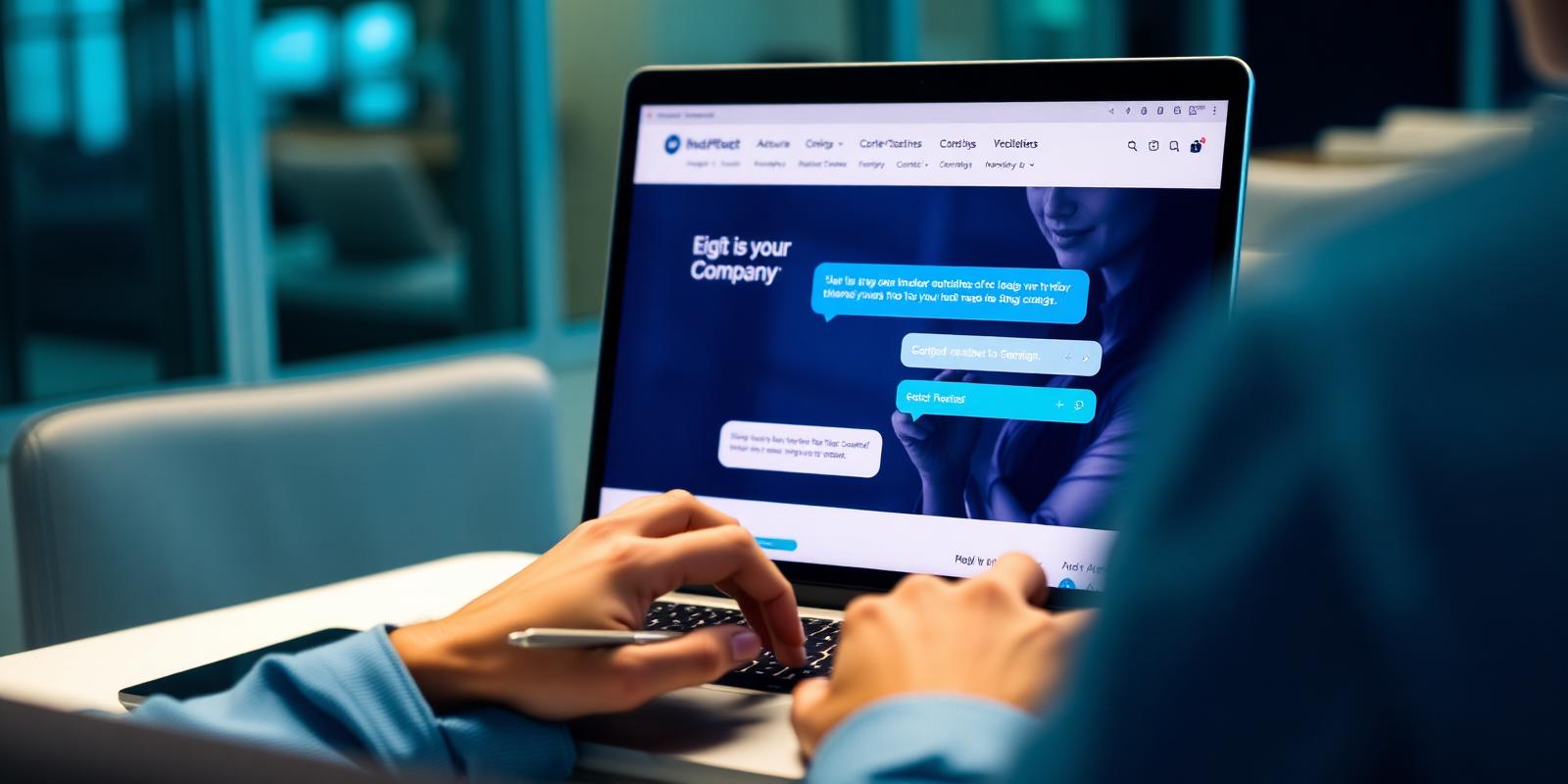
The alternative is to add a layer between traffic generation and lead capture — something that behaves less like a brochure and more like the best person on your team happening to be free the moment someone walks in.
In practice that means a visitor can ask a real question in their own words and get a specific answer drawn from approved company knowledge. It means follow-up questions are welcome. It means the conversation can recognize what the person is actually trying to accomplish, distinguish curiosity from intent, and propose the right next step — a consultation, a quote, a specific product, the right program — rather than leaving them to guess.
And it means that when someone identifies themselves, your team receives the context of the exchange rather than three fields from a form.
Nothing about this requires replacing the website you already have. The pages, the brand, and the SEO equity stay. The layer sits on top of them. That is the point.
Where This Shows Up First
The businesses that feel the gap most acutely share one trait: a new customer is worth enough that a lost visitor is a real loss.
A dental practice paying for implant searches, where prospective patients research for weeks before contacting anyone. A consulting firm whose buyers arrive with a problem rather than a service in mind. A law firm receiving inquiries from people who cannot name the relevant practice area. An e-commerce brand losing carts to a single unanswered question. An association whose visitors cannot tell which membership or certification applies to them.
In each case the traffic is already there and already paid for.
The Question Worth Asking Monday
Not "should we use AI on our website?" — that is the technology question again.
Ask instead: of the people who visited last month, how many started a conversation with us, how many became someone we could follow up with, and what did the rest want?
If the honest answer to the last part is "we have no idea," that is the finding. Your website is explaining your business well enough. It is not yet helping people do business with you.
That distinction is the whole basis of OceSha's AI Customer Acquisition Framework — and the AI Customer Acquisition capability it describes. The Concierge on the OceSha Ventures homepage is the same thing running on our own traffic, if you would rather test it than read about it.